
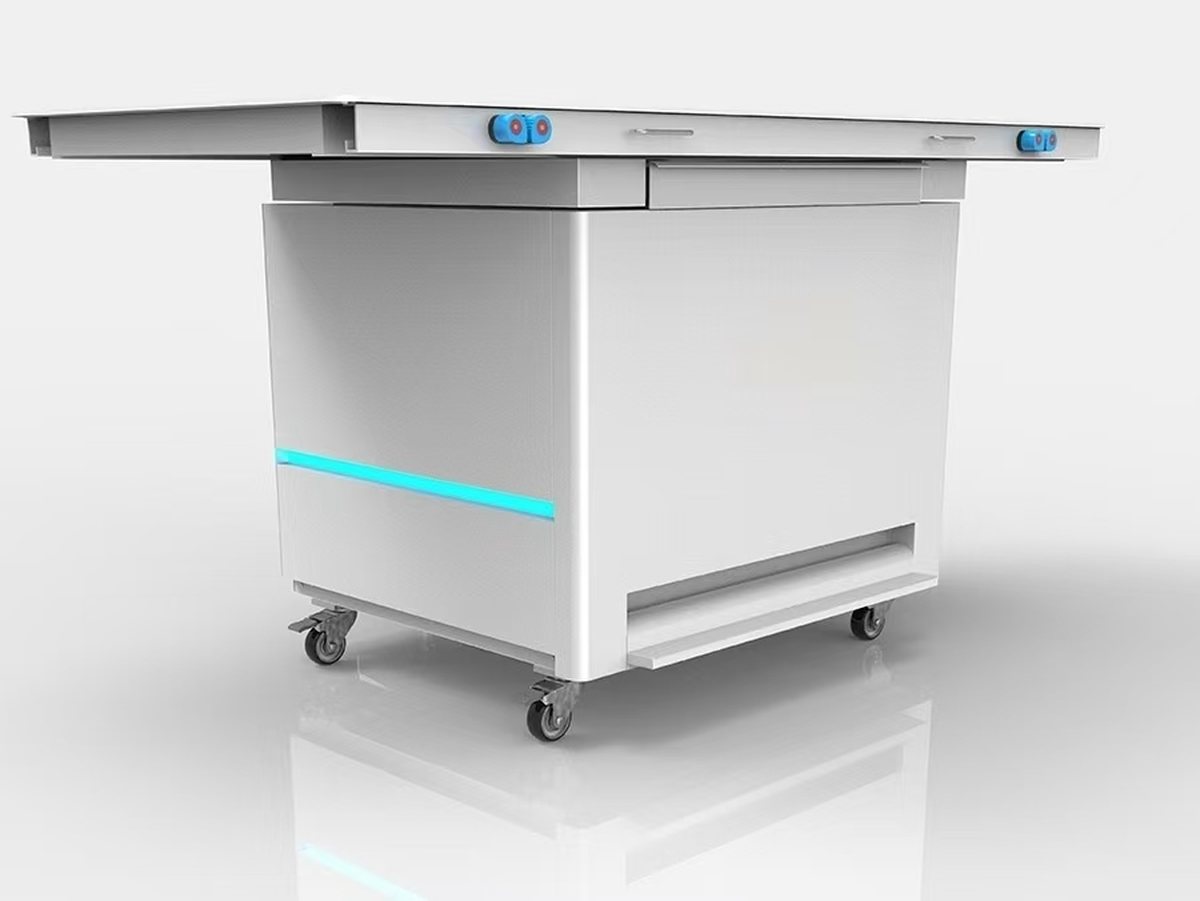
Examination table
Patient table with the detector built in beneath the top surface, so the animal rests on a flat, cleanable panel.
Veterinary imaging
The same detector and imaging engineering we build into industrial X-ray inspection, packaged for a small-animal clinic — where the constraint is floor space and a vet who does not want to become a software operator.
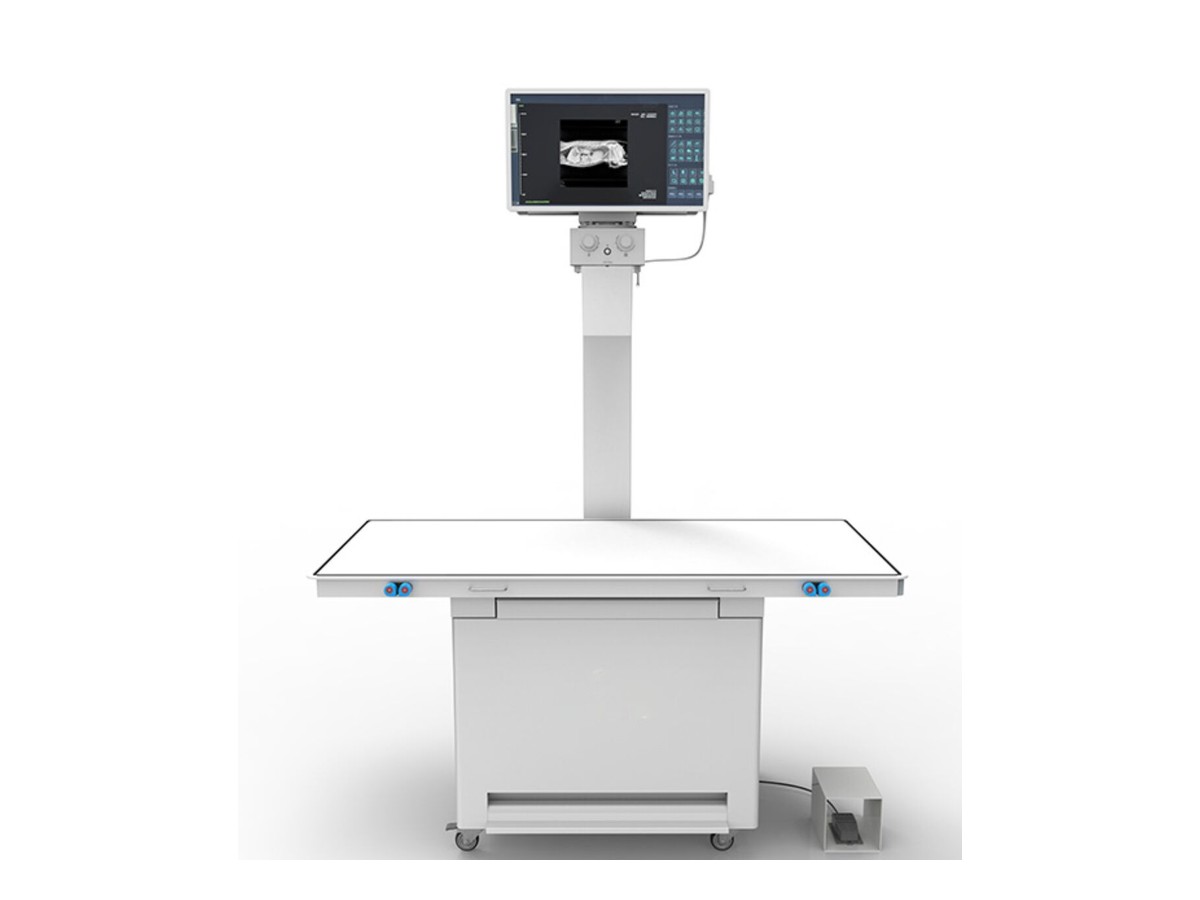
For small-animal practice
A flat-panel detector replaces film and chemistry entirely: expose, see the image in seconds, adjust the window, send it to the record. What used to take twenty minutes per study now takes two.
Layout
A separate table, a display and a control set — so the vet tables the animal once rather than lifting it between machines.
Patient table with the detector built in beneath the top surface, so the animal rests on a flat, cleanable panel.
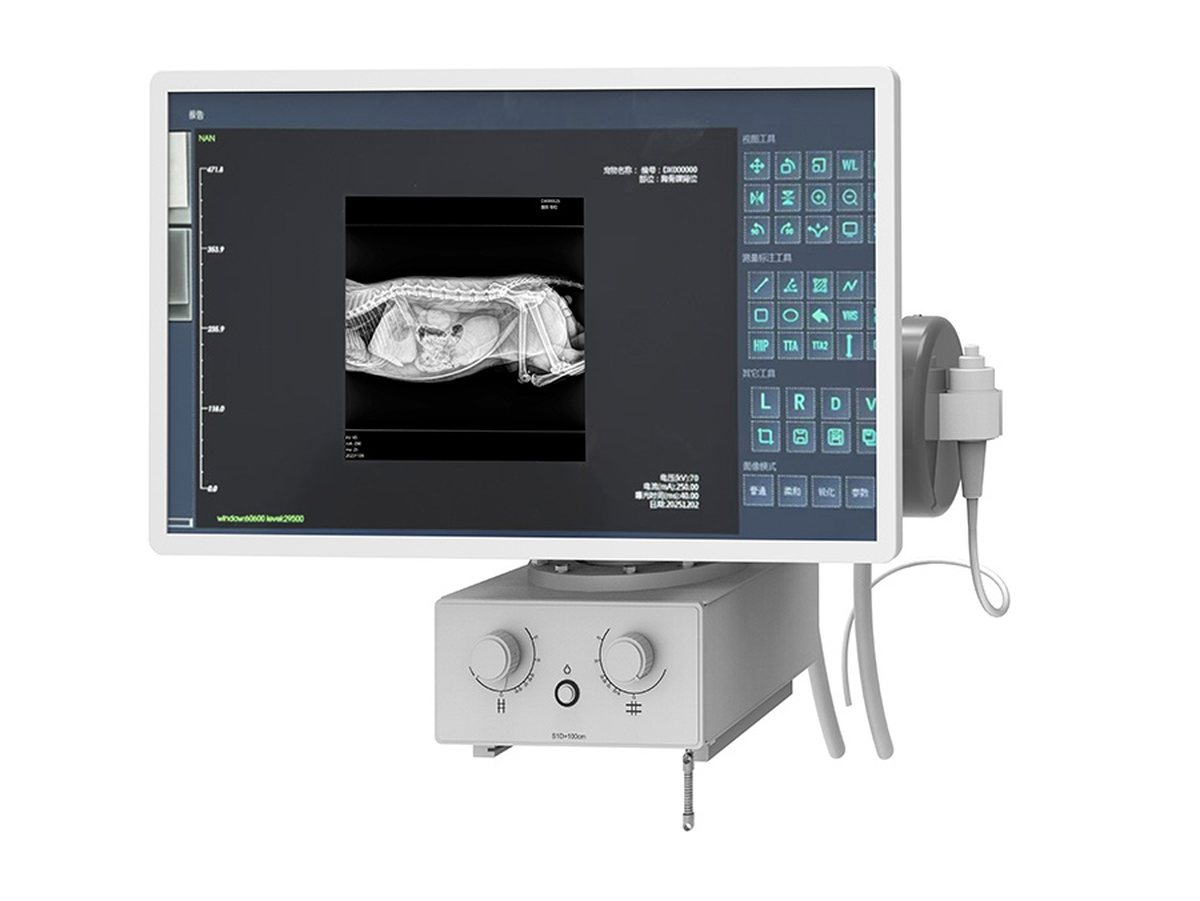
Review, window and level, then export. The display is mounted where the vet stands, not behind a separate desk.
Buying notes
The detector specification drives image quality more than the generator does. Ask for the pixel pitch and the DQE, not just the kV.
Some quotes are cheap because each additional workstation needs a licence. Ours includes a complete workstation, so ask what is in the box.
A flat panel that fails in a two-vet practice stops the practice. Ask what the replacement lead time is before you sign, for any brand you consider — ours or someone else’s.
Full technical specification, detector options and pricing are issued on request, against the studies you actually take.
Tell us the species mix and the studies you take most often. We will recommend a detector and a room layout, and quote it landed.